The Future of Online Therapy: 2026 Trends, Benefits & Risks
Author – Nihit Verma, Counseling Psychologist
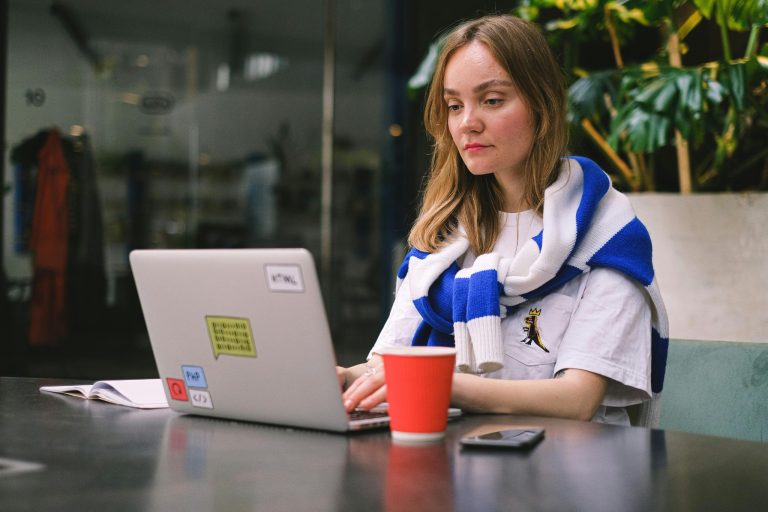
Therapy is needed by almost everyone in 2026; however, the way we access mental health support has changed dramatically in recent years with the rise of online therapy. What once required a commute, a waiting room, and a fixed appointment slot can now happen from the comfort zone of your bedroom, your lunch break, or a quiet cafe.
That is where Positivty comes in, offering some of our renowned and licensed therapists who are twice as effective as in-house therapists. Surprisingly, for millions of people, it has removed the single biggest barrier to getting help, which is getting started.
Nearly 35% to 45% of adults specifically prefer online or telehealth therapy based on their situation and age group.
What is Online Therapy?
To begin with, Online treatments and therapy, also called teletherapy, e-therapy, or virtual therapy, is professional mental health treatment delivered through digital means rather than a traditional in-person office, such as through a website or apps that are easy to access and confide in.
If you still doubt its validity, then be it known that it encompasses the same therapeutic approaches, the same trained and licensed professionals, like an in-house therapist, showering the same evidence-related techniques as a real conventional therapy that is otherwise delivered through a screen rather than across a room this time.
This way, as many people as possible can reach it.
Start Therapy Today
Benefits of Seeking Online Therapy
Did you know that online therapy existed before the pandemic, but no one took it all that seriously?
The Pandemic (2020), however, accelerated its adoption in ways no one had anticipated. For example, Vasanth Ravi, a popular Tamil actor, has spoken about how being indoors during lockdown had made him realise he was constantly struggling with stress and anxiety. He therefore sought out an online therapist and relied on regular online consultations from home to cope with the mental toll of the crisis.
Likewise, when in-person services became inaccessible overnight, millions of people around the world discovered that therapy through a screen was not just a compromise but a way forward. It was genuinely flexible, often more convenient, and in some cases, way more comfortable than travelling all the way and sitting in a stranger’s office for the first time.
Five years forward, platforms have expanded, research has caught up, and attitudes have changed towards it, according to a 2023 research paper published in Nature Mental Health, which highlighted that through online therapy and mental support online is highly cost-effective.
Researchers found that individuals who chose online CBT or cognitive behavioural therapy were able to begin treatment quite earlier than those waiting to seek in-person therapy, leading to quicker improvements in quality of life and reduced spending on additional healthcare services.

For Who Is Online Therapy For?
Online therapy is for everyone. But it tends to be particularly well-suited for people who have an unstructured or busy schedule.
Online therapy, due to its flexibility, removes the need to carve out travel time, making it far easier to fit sessions into a working day, especially when the urge of a breakdown is more, a hectic parenting schedule, or a life that simply doesn’t have two neat hours available.
People in Tier Two or Three Cities or Rural Areas
In India, particularly, access to qualified mental health professionals is heavily concentrated in metros, and people who come from a humble background don’t even think that therapy is for them.
They often mock it by saying, “Who has money to pay someone for listening? Or our online treatments for therapy are tea!”
It is not their fault either, because survival has taught them to see emotional or self-care as a luxury.
However, online therapy, like in Positivty, opens up the full range of licensed therapists to anyone with a reliable internet connection, regardless of whether they live in the hubris of Mumbai or a small town in Bihar.
People with Physical Limitations or Health Conditions
Did you know that adults with disabilities report experiencing frequent mental distress almost 5 times as often as adults without disabilities do?
Leaving home for them is a dependency, and regular appointments aren’t always possible.
Online therapy for depression, therefore, removes that barrier entirely.
Although people with disabilities or developmental delays respond strongly to the stress of a crisis. Therefore, therapy provides more than just treating mental health conditions as it also helps build coping skills, provides a space for self-expression, and improves overall quality of life, especially for people living with disabilities.
People Managing Stigma
In communities, where seeking mental health support still carries social stigma, online therapy offers privacy that in-person visits cannot always guarantee.
There’s no waiting room, no familiar face at reception, no car parked outside a psychology clinic.
What Are the Different Formats of Online Therapy?
Video Therapy
Video therapy is the closest equivalent to in-person sessions. You see your therapist in real time, they see you, and the conversation flows much as it would face to face.
Most people find this format the most natural and effective.
Audio Therapy
Audio therapy, as the name suggests, removes the visual element, which some people find less intimidating and more freeing and find comfort in voices, particularly when discussing difficult or shameful experiences.
It is also useful when the internet connection quality makes the video totally unreliable.
Text-Based Therapy
Text-based therapy involves live chat sessions with an experienced therapist at a scheduled time.
It suits people who express themselves more easily in writing instead of speaking out or suffer through speech disabilities, or those with hearing impairments, or anyone who finds verbal communication in emotional contexts particularly difficult.
Asynchronous Messaging
Asynchronous messaging allows you to write to your therapist at any time, processing thoughts as they arise rather than saving everything for a weekly session.
Your therapist responds within a set window, usually within 48 hours.
This format works well as a supplement to video sessions or as a standalone option for people with very unpredictable schedules.
What Risks Should You Look For in an Online Therapy Platform?
Not all platforms are created equal. Here’s what to look for before committing.
Check for Licensed, Verified Therapists
The platform, like Positivty, should clearly state that all online therapists are licensed mental health professionals, not mere coaches, counsellors without proper clinical training, or just AI chatbots.
Check what licensing standards are applied and whether those standards are relevant to you and the region.
For something like anxiety or depression, the research is actually quite encouraging.
Internet-based cognitive behavioural therapy, especially when there’s a real therapist involved rather than just an app sending you reminders, has shown genuine, meaningful results.
Privacy and Security Should Be Explicit
When you are sharing the most private corners of your inner life with someone online, the last thing you should have to worry about is where that information ends up.
Before you actually sign up for any online therapy platform, ask the questions that matter most, like:
- Are sessions encrypted properly?
- Is your data protected?
- Are conversations kept confidential?
Therapy only works when you feel genuinely safe to say what is true.
So Positivty positions privacy and confidentiality as central to its offering, and that safety has to be built into the platform itself, not just implied by a logo and a reassuring tagline.
Transparent Pricing
You should know exactly what you’re paying before you begin, with no hidden fees or surprise charges after your first session.

Online Therapy in India, and What to Expect
India is at a groundbreaking turning point in its relationship with mental health.
The old stigma that once made these conversations uncomfortable, unspoken, and almost impossible in many communities is slowly and meaningfully loosening, driven by many public figures speaking openly about it, by a younger generation that has grown up with more psychological vocabulary than their parents, and by the simple reality that the pandemic made mental health impossible to ignore, especially in India.
Let us look at the example of a village resident in Ludhiana, Punjab, overcoming the deep-rooted stigma of faith healers who, unfortunately, led to his father’s demise, and later, when depression took over him, he broke the stigma and chose proper therapists to seek help for mental support online.
Online counselling services are particularly significant in the Indian context because it addresses several of the most common barriers: geographic access, privacy, cost, and the ability to find a therapist who speaks your language and understands your cultural context.
For the first time, someone in a small town in Tamil Nadu or a village in Bihar has access to the same quality of mental health support as someone in South Mumbai or South Delhi. That is, mind you, not a small thing. That is, quietly, a big revolution! Online therapy is not a compromise in any way. It is not lesser therapy. It is not the option you choose when you can’t access the real thing.
For years, people around the world have found it to be the real thing, accessible, effective, private, and genuinely life-transforming! The question was never really whether mental support online works. The question is whether you are ready to begin or not.
And congratulations if you have read this far, there’s a good chance part of you already knows the answer to what is troubling you.
Let us resolve it through Positivty.
The right support is closer than you think. All it takes is one small, courageous step toward it!
Good Luck!